

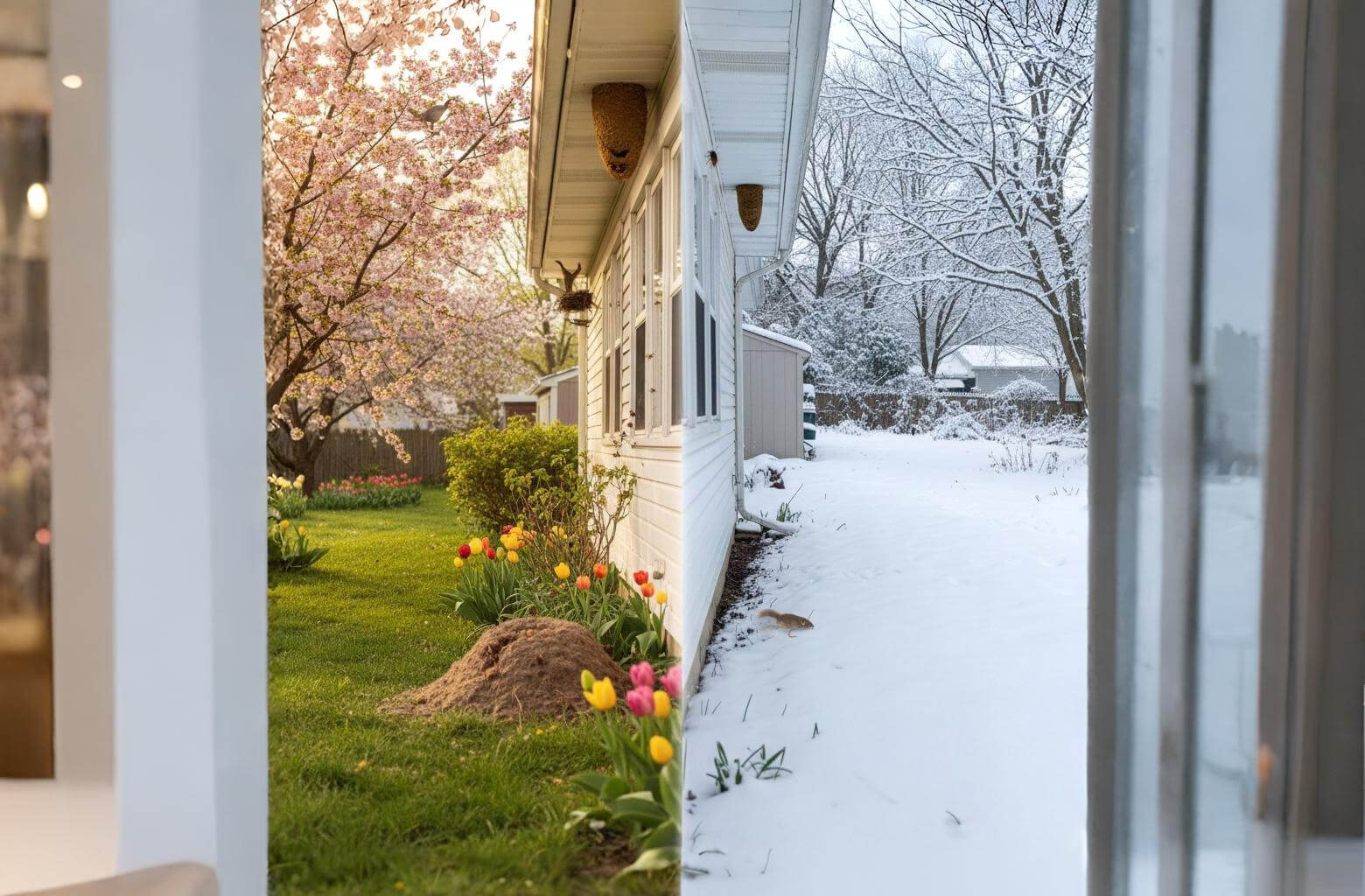
Pest activity in Maryland doesn’t follow just one pattern it evolves with the weather, temperatures, and seasonal changes throughout the year. For homeowners, understanding how pests behave from spring through winter makes it easier to prevent infestations, address problems early, and plan the right pest control strategies at the right time. From swarming ants and mosquitoes in warm months to rodents seeking warmth in colder ones, each season brings a unique lineup of pest challenges.
Spring: New Activity Begins
When spring arrives in Maryland and outdoor temperatures consistently rise above about 50°F, many pests emerge from their winter hiding spots and begin feeding, breeding, and exploring. This period is often one of the busiest of the year for pest activity as insects that overwintered in sheltered places such as in soil, leaf litter, or inside structures wake up and become active. Common early spring pests include ants searching for food inside homes, termites beginning their swarming and colony expansion, and spiders moving into outdoor spaces to hunt insects.
Spring is also when homeowners may notice winged ants and termites. These annual “swarmers” emerge as mature colonies produce reproductive individuals that fly in search of new nesting sites. While winged ants aren’t always a structural threat, termite swarmers often signal an established colony nearby and that can mean significant wood‑damage risk if left untreated.
During spring, proactive pest control measures pay off. Scheduling inspections early in the season and sealing potential entry points help keep ants, spiders, and other insects from establishing a foothold as temperatures climb. Moisture control and elimination of standing water also discourage pests from congregating near and inside your home.
Summer: Peak Pest Season
Summer in Maryland is marked by heat and humidity conditions that many pests love. Warm temperatures accelerate pest metabolism and reproduction, leading to larger populations and more frequent encounters in and around homes. Mosquitoes thrive in standing water such as gutters, birdbaths, and planters. Ticks become active in yard vegetation and on pets. Cockroaches and ants take advantage of food sources around outdoor grills or poorly sealed kitchens. Hornets, yellowjackets, and other stinging insects build their nests vigorously and can pose threats to people enjoying outdoor activities.
Insects that feed on plant material such as certain beetles, ants, and bees may also be abundant in gardens and landscape beds. Even rodents remain active, seeking shaded areas and food sources in warm months. Together, these pests make summer the peak season for infestations and nuisance issues.
For homeowners, regular property maintenance including trimming vegetation, eliminating standing water, managing trash and food sources, and scheduling professional pest control treatments is essential during summer to prevent infestations from gaining momentum.
Fall: Invasion and Overwintering Behavior
As temperatures begin to cool in fall, pest behavior starts shifting again. Many insects and rodents respond to dropping temperatures by migrating toward warmer, sheltered spaces especially homes and buildings. Rodents such as mice and rats become more noticeable as they search for heat, nesting materials, and food sources. Brown marmorated stink bugs, silverfish, spiders, and centipedes may also move indoors as they prepare for winter.
Unlike spring or summer pests, fall invaders may be already inside by the time temperatures dip. Some species like stink bugs and lady beetles cluster in attics and wall voids during winter but don’t necessarily reproduce indoors; their presence is mostly nuisance in nature. Spiders also begin migrating toward basements and other dark areas where other insects are present.
Fall is the last critical opportunity for homeowners to seal gaps, repair screens, inspect weatherstripping, and schedule preventative pest control services. Proper maintenance prevents many winter pest problems before they happen.
Winter: Shelter and Survival
Winter doesn’t mean pest problems disappear they just change form. While cold outdoor conditions may shut down many pests temporarily, many continue to be active inside heated structures. Rodents rarely hibernate. Instead, they squeeze through tiny gaps and establish nests in warm attics, garages, basements, and wall cavities. House mice in particular are a frequent winter pest in Maryland, carrying diseases and damaging insulation or wiring.
Insects such as German cockroaches, cluster flies, ladybugs, and even ants may remain active in warm indoor spaces where they find food, moisture, and shelter. Additionally, overwintering insects such as stink bugs or boxelder bugs can show up in homes seeking refuge from the cold.
While pest activity might be quieter overall outside during winter, occasional warm days even brief temperature spikes can “reactivate” dormant pests and bring them out of hiding. This means homeowners should remain vigilant year‑round, not just in warm months.
Year‑Round Pest Management Matters
Understanding how pest activity changes through Maryland’s seasons empowers homeowners to take action at the right time. Spring and summer are about active infestations and reproduction. Fall is about invasion and preparation for cold weather. Winter keeps pests indoors where warmth and food attract them.
Good practices include:
- Spring: Seal cracks and gaps before pests emerge.
- Summer: Eliminate standing water and food attractants.
- Fall: Inspect homes for entry points and schedule preventive treatments.
- Winter: Monitor indoor pest activity and address rodent entry and nesting.
Because Maryland’s climate allows some pests to survive year‑round especially indoors a seasonal pest control plan from a trusted provider like Severna Park Pest Control can help keep homes protected in every season.
Understanding these patterns helps you anticipate pest behavior rather than reacting after infestations take hold, saving you time, stress, and potential damage to your home.


