

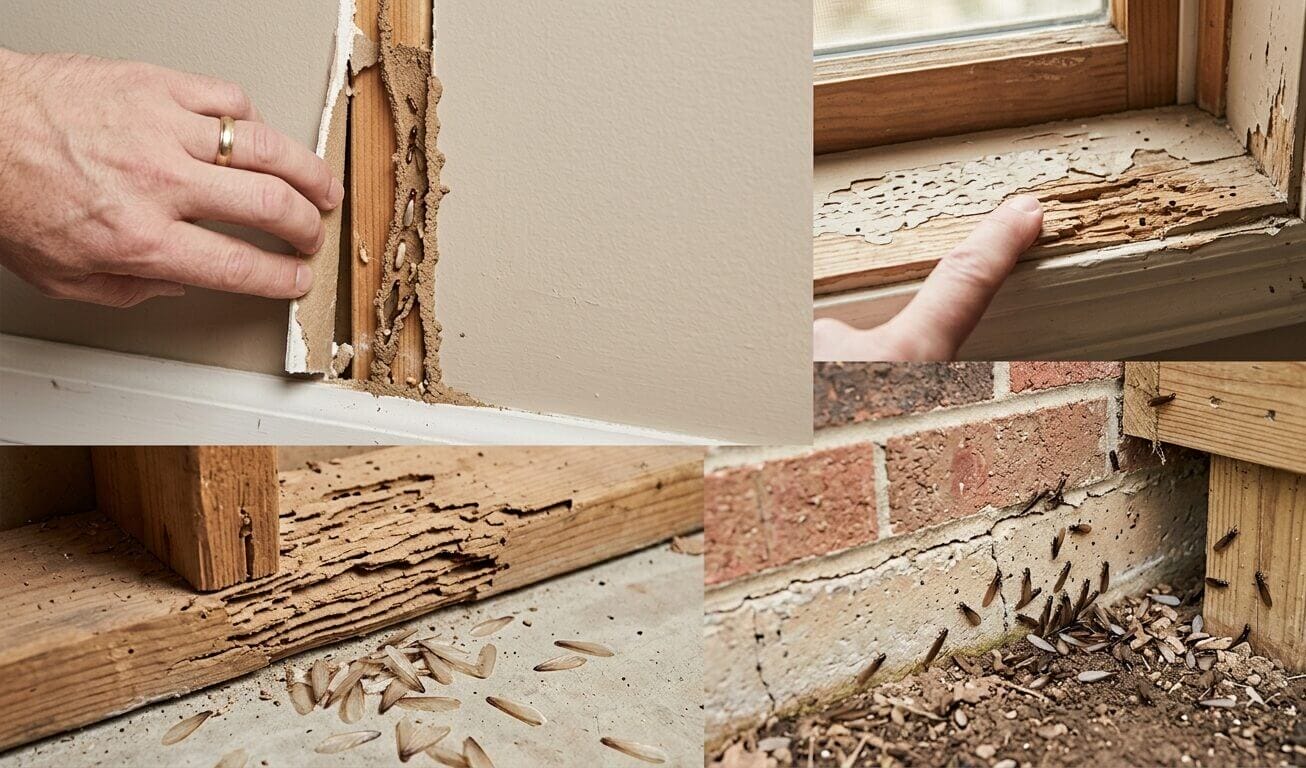
Termite season begins as temperatures rise and moisture levels increase during the spring months. Many homeowners are unaware that termite activity often starts long before visible damage appears. These pests work quietly inside wood structures, which means infestations can grow for months or even years before they are discovered. Because termites feed on materials that support the structure of a home, early detection is essential for preventing costly repairs.
As termite colonies become active in the spring, they begin expanding and searching for new areas to inhabit. One of the most noticeable signs of this activity is termite swarming. Swarming occurs when winged reproductive termites leave their colony to form new colonies nearby. Homeowners may see these winged insects around windows, doors, or light sources inside their homes.
Swarmers are often mistaken for flying ants, but they serve a different purpose. Their presence usually indicates that a mature termite colony is nearby. Even if swarmers appear outside the home, it can still be a warning sign that termites are active in the surrounding area. If swarmers appear indoors, it may suggest that termites are already living within the structure.
After swarming, termites shed their wings. Homeowners may notice small piles of discarded wings on window sills, floors, or near entry points. These wings are a common indicator that termite activity has occurred nearby. Because swarmers are attracted to light, windows and doors are often where these wings appear.
Another major warning sign of termite activity is mud tubes. Termites build these narrow tunnels using soil, saliva, and wood particles. Mud tubes provide protection from dry air and predators while termites travel between their colony and food sources.
These tubes are often found along foundation walls, crawl spaces, basement walls, or exterior structures. They may appear as thin lines of dried mud running vertically along surfaces. Breaking open a mud tube may reveal active termites moving inside, but even empty tubes indicate that termites have been present in the area.
Wood damage is another serious sign that termites may be active in a home. Because termites eat wood from the inside out, the outer surface often looks normal while the interior structure becomes hollow. Wood that sounds hollow when tapped can indicate termite feeding beneath the surface.
Homeowners may also notice wood that appears blistered, warped, or uneven. Floors may begin to sag slightly, and doors or windows may become difficult to open or close. These structural changes can occur when termites damage wooden supports inside walls or beneath flooring.
Termites are drawn to moisture, which is why areas with excess humidity or water leaks often attract them. Basements, crawl spaces, and areas around plumbing fixtures are common places where termites begin feeding. Damp wood becomes easier for termites to consume, making moisture control an important part of termite prevention.
Leaking pipes, clogged gutters, and poor drainage around the home can all create moisture problems that attract termites. Repairing leaks and improving drainage reduces the conditions that make a home appealing to termite colonies.
Wood to soil contact is another factor that increases the risk of termite infestations. When wooden structures touch the ground directly, termites can move from soil into wood without being exposed to open air. Deck posts, siding, door frames, and wooden steps are common areas where this problem occurs.
Raising wooden structures above the soil or using protective barriers can help reduce this risk. Firewood storage is another area homeowners should consider. Stacked firewood placed directly against the house provides both shelter and food for termites. Keeping firewood stored away from the home and elevated off the ground helps prevent termites from moving toward the structure.
Another sign homeowners may notice is bubbling or peeling paint. This occurs when termites create moisture behind surfaces while feeding on wood underneath. The trapped moisture causes paint to appear uneven or damaged.
Although this symptom may look similar to water damage, it can sometimes indicate termite activity behind walls or wooden trim. If bubbling paint appears in combination with other termite warning signs, further inspection may be necessary.
In some cases, homeowners may notice small holes in drywall or wood surfaces. These openings can appear when termites break through surfaces or when structural materials weaken due to internal feeding. While these holes may seem minor, they can be indicators of deeper damage within the structure.
Another less obvious sign of termite activity is the presence of termite droppings. Certain termite species leave behind small pellets that resemble tiny grains. These pellets often appear near wooden surfaces where termites are feeding. While not all termite species produce visible droppings, their presence can confirm an infestation.
Because termites remain hidden most of the time, many infestations are discovered only during professional inspections. Pest control specialists know where termites typically enter and which structural areas are most vulnerable. Their inspections often include checking foundations, crawl spaces, attics, wooden beams, and areas where moisture accumulates.
Regular termite inspections allow homeowners to identify problems early before serious structural damage occurs. Early treatment is often far less costly than repairing extensive termite damage later.
Severn Park Pest Control works with homeowners to detect and manage termite activity before it spreads throughout a structure. Their termite services focus on identifying signs of infestation, locating active colonies, and applying targeted treatments that protect the home.
Professional termite treatments are designed to eliminate colonies and prevent new ones from forming. These treatments may involve protective barriers around the home, specialized products that target termite behavior, and monitoring systems that track termite activity over time.
Preventative termite protection is often one of the most effective ways to avoid infestations. Even homes that have never experienced termite problems can benefit from routine monitoring and protective treatments.
Environmental factors also influence termite activity. Homes located in humid climates or near wooded areas may experience higher termite pressure because colonies already exist nearby. Termites naturally search for new food sources, which means nearby homes can become potential targets.
Homeowners can reduce their risk by maintaining the areas around their home. Clearing away excess vegetation, removing wood debris, and keeping landscaping trimmed can reduce hiding places for termites. Ensuring proper ventilation in crawl spaces and basements also helps reduce moisture levels that attract termites.
Construction materials can also influence termite risk. Homes that contain large amounts of untreated wood or structural materials exposed to soil may be more vulnerable. During renovations or landscaping projects, homeowners should consider materials and designs that reduce termite access.
Education plays an important role in termite prevention. Many homeowners do not realize how subtle termite warning signs can be. Because termites work quietly inside structures, damage often occurs long before it becomes visible.
Learning how to recognize early warning signs allows homeowners to act quickly if problems arise. Swarmers, mud tubes, damaged wood, and moisture problems should always be taken seriously, even if they appear minor at first.
Spring is one of the most important times of year for termite awareness. As colonies become more active, the chances of noticing signs such as swarmers or discarded wings increase. Paying attention to these signals can help homeowners address termite activity before it spreads.
Routine inspections, moisture control, and professional pest management services provide the strongest defense against termite infestations. When these steps are taken early, homeowners can protect their property and avoid the extensive repairs that termite damage can cause.
Severn Park Pest Control helps homeowners stay ahead of termite activity by providing inspections, prevention strategies, and effective treatment solutions. By identifying termite activity early and implementing protective measures, homeowners can safeguard their homes during termite season and beyond.


