

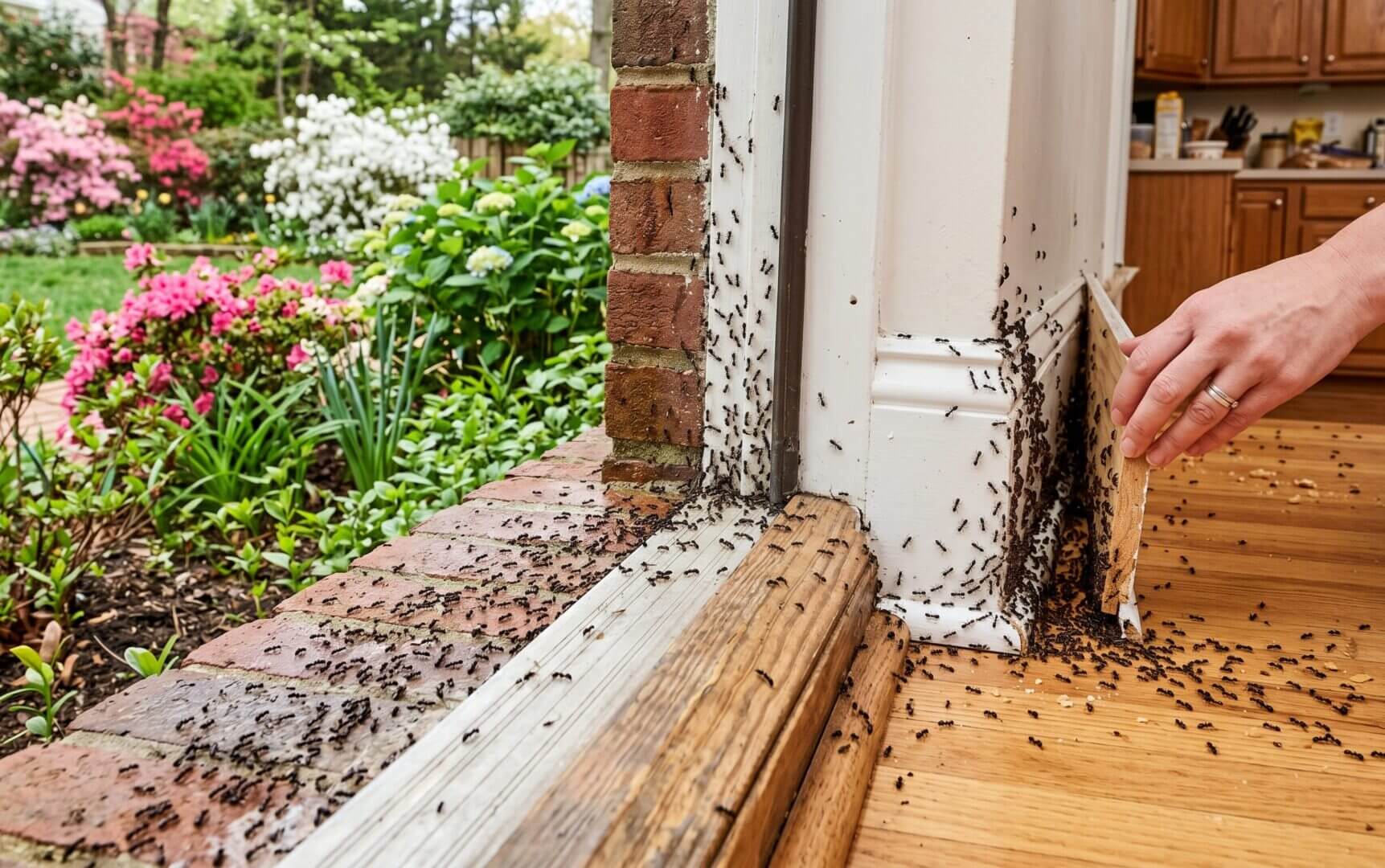
Spring brings warmer temperatures, longer days, and increased pest activity across Maryland. Among the most common seasonal pest problems homeowners face are ant infestations. Many residents notice ants suddenly appearing in kitchens, bathrooms, basements, and outdoor spaces as soon as temperatures begin to rise. These infestations often seem to happen overnight, but ant activity usually starts long before homeowners notice visible trails inside the home. Understanding why ant infestations increase during spring helps homeowners take the right steps to prevent larger problems.
Ants become more active in spring because colder winter temperatures force many colonies into a dormant state. During winter, ants remain hidden underground, inside walls, or beneath structures where they stay protected from freezing conditions. As the weather warms, colonies become active again and begin searching for food and water. Worker ants leave the nest to locate reliable sources that can support colony growth during the busy spring and summer seasons.
Spring rain also contributes to increased ant activity. Heavy moisture forces ants out of underground nests and pushes them toward dry indoor spaces. Homes provide warmth, shelter, and access to food, making them highly attractive to ants during wet weather. Small openings around windows, doors, pipes, and foundations allow ants to enter easily. Once they locate food, they leave scent trails that guide other ants directly to the source.
Food availability inside the home plays a major role in attracting ants. Crumbs on countertops, open food containers, spills, pet food, and garbage create easy feeding opportunities. Even small amounts of food residue can attract scouting ants. Once worker ants discover a dependable source, they quickly communicate with the colony and increase activity in that area. This is why homeowners often notice long ant trails in kitchens and pantries during spring.
Maryland homes commonly deal with several ant species, each creating different challenges. Odorous house ants are among the most common indoor invaders. They are attracted to sweet foods and often build nests near moisture. Carpenter ants are another major concern because they tunnel through wood and can damage structures over time. Pavement ants frequently enter homes through cracks in foundations and sidewalks, especially during seasonal weather changes.
Carpenter ants deserve special attention because many homeowners mistake them for termites. Unlike termites, carpenter ants do not eat wood, but they tunnel through it to create nesting galleries. Over time, this activity weakens wooden structures and creates costly repair issues. Damp or damaged wood increases the likelihood of carpenter ant infestations because these conditions make tunneling easier.
Moisture problems inside the home often increase the risk of ant infestations. Leaking pipes, damp basements, clogged gutters, and poor ventilation create ideal conditions for ants searching for water. Bathrooms, kitchens, and laundry rooms are common areas where ant activity appears because they provide consistent moisture sources. Fixing leaks and improving ventilation help reduce these attractants.
Outdoor conditions also influence indoor infestations. Overgrown vegetation, mulch placed too close to the foundation, and tree branches touching the home create pathways for ants to enter. Ant colonies often establish nests near foundations where food and shelter are easily accessible. Maintaining a clean outdoor perimeter reduces the chances of ants moving indoors.
One reason ant infestations become difficult to control is that visible ants represent only a small portion of the colony. Killing worker ants on sight may provide temporary relief, but it rarely eliminates the source of the problem. Colonies often contain thousands of ants hidden behind walls, beneath floors, or underground. Effective treatment must target the colony itself rather than just the ants that appear indoors.
Store bought sprays often fail because they disrupt ant trails without eliminating the nest. In some cases, improper treatment can cause colonies to split and spread into multiple nests, making the infestation worse. Professional treatment strategies focus on identifying the species, locating nesting areas, and applying solutions that eliminate the colony completely.
Bait systems are commonly used to control ants because they allow worker ants to carry treatment materials back to the colony. This method targets the source of the infestation and reduces long term activity. Different species respond to different bait formulations, which is why proper identification is important for successful control.
Preventing spring ant infestations starts with limiting access to food and water. Wiping down counters, storing food in sealed containers, cleaning spills quickly, and removing trash regularly help reduce attractants. Pet food should not remain exposed for long periods, especially overnight when ants are highly active.
Sealing entry points around the home is another important step. Small cracks around windows, doors, utility lines, and foundations provide easy access for ants. Caulking gaps and repairing damaged screens help create a barrier that limits entry. Installing door sweeps also reduces the chances of ants moving indoors.
Routine inspections help homeowners detect early signs of infestations before colonies grow larger. Ant trails, small piles of debris near walls, and increased activity around moisture sources often indicate a developing problem. Addressing these signs early prevents more serious infestations later in the season.
Professional pest control services provide a stronger level of protection against recurring ant infestations. Experts understand seasonal ant behavior and apply treatments designed for long term control. Services from Severna Park Pest Control focus on both elimination and prevention, helping homeowners protect their properties throughout spring and beyond.
Seasonal pest control treatments are especially effective during spring because they target colonies when activity begins increasing. Preventive treatments create protective barriers around the home and reduce the chances of ants establishing indoor trails. Ongoing service also allows technicians to monitor activity and adjust treatments as conditions change.
Integrated pest management combines prevention, monitoring, and targeted treatments to control ants more effectively. This approach reduces conditions that attract ants while applying treatments only where necessary. By focusing on long term prevention, homeowners experience fewer recurring infestations and maintain better protection throughout the year.
Spring ant infestations are common in Maryland because warming temperatures, increased moisture, and growing colonies all contribute to higher activity levels. Homes provide shelter, food, and water that attract ants searching for reliable resources. Without proper prevention and treatment, small infestations can quickly expand into larger problems.
Homeowners who stay proactive reduce the likelihood of recurring infestations. Managing moisture, sealing entry points, maintaining cleanliness, and scheduling professional inspections all contribute to better pest control results. Working with Severna Park Pest Control provides homeowners with proven solutions that address both current infestations and future risks, helping keep Maryland homes protected during the busy spring season.


