

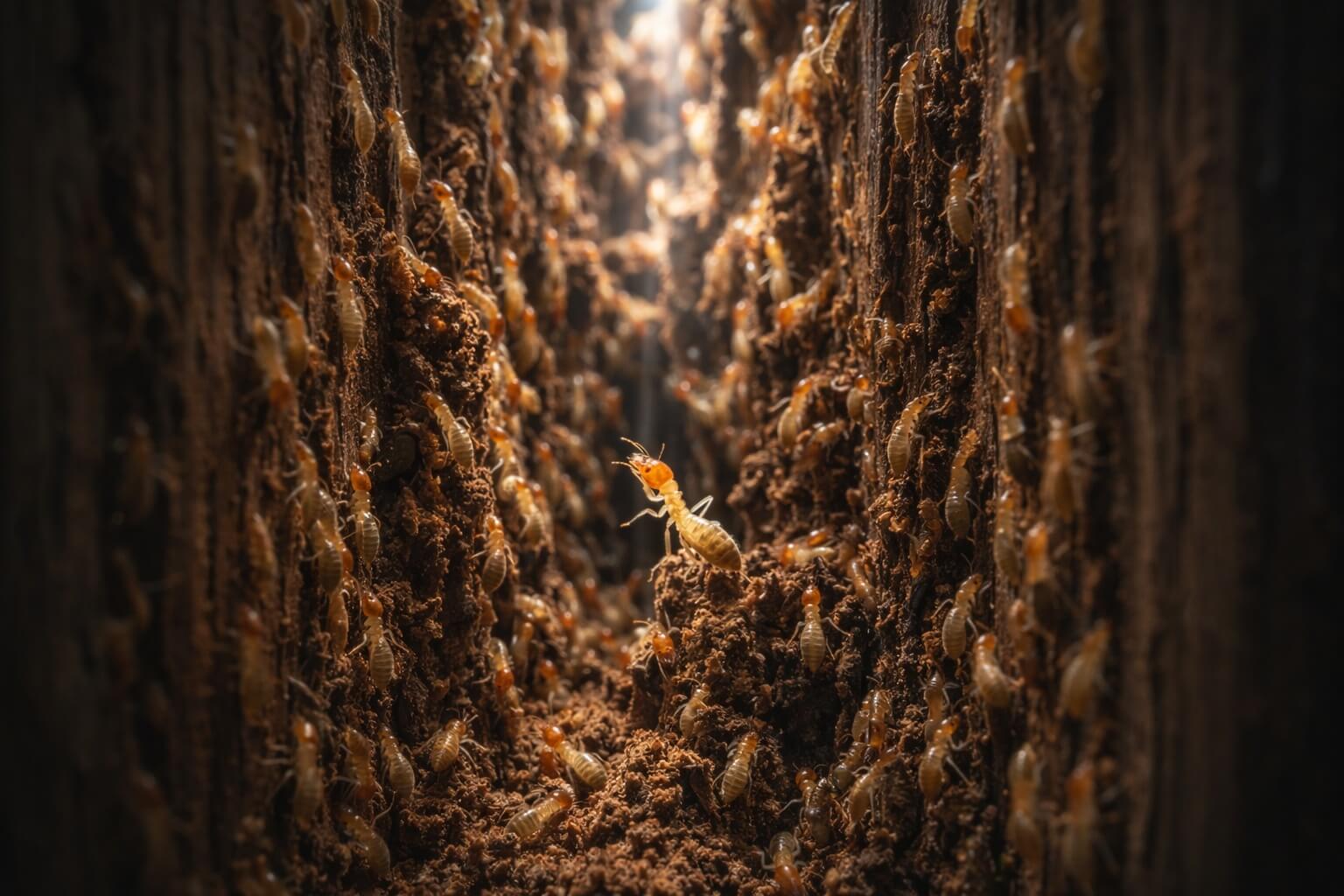
Termites are notorious for their silent destruction. Unlike many pests that leave visible evidence early, termites often stay hidden deep within walls, foundations, and wooden structures until damage becomes extensive and expensive. For Maryland homeowners, recognizing why these pests remain out of sight and learning the early warning signs can mean the difference between a routine inspection and a major structural repair bill. Severna Park Pest Control regularly responds to calls where families had no idea termites were present until significant damage was discovered. Understanding termite behavior and risk factors is the first step toward protecting your home.
Why Termites Stay Hidden
Termites are not like ants or cockroaches that forage openly in kitchens or bathrooms. Their survival strategy depends on remaining concealed, which brings several advantages:
- Protection from predators and environmental conditions: Termites avoid light, heat, and dryness. They thrive in dark, moist environments like inside wood, under foundations, or within crawl spaces. By staying hidden, they avoid exposure that could dry them out or make them vulnerable.
- Steady access to food: Wood‑destroying termites feed on cellulose, a component of wood and plant materials. By tunneling inside structural lumber, they can eat continuously without needing to emerge into open spaces.
- Uninterrupted colony growth: A termite colony can expand quietly for years if left undisturbed. Nests deep in the soil or inside structural wood protect the colony while soldiers and workers continue feeding and reproducing.
Because their feeding takes place deep within the wood, most termite activity goes unnoticed until visible signs of infestation like sagging floors or hollowed timbers begin to appear.
Types of Termites That Target Maryland Homes
Maryland homeowners are primarily at risk from subterranean termites, which live in soil and build hidden tunnels upward into structures. These termites create mud tubes narrow, soil‑based tunnels that allow them to travel from the ground into wood without exposure to air. These tubes are often located behind baseboards, inside crawl spaces, or along foundation walls places homeowners rarely inspect.
Drywood termites, while less common in this region, can also infest wood above ground and cause damage without soil contact. Because both types live inside the material they eat, their presence can go undetected for long periods.
Why Damage Is Often Discovered Too Late
A major reason termites are found only after damage is already significant is that the earliest signs are subtle and easy to miss:
Internal Tunneling
Termites consume wood from the inside out, leaving only a thin veneer of surface wood. To an untrained eye, the wood may look intact even though it is hollowed inside. This internal feeding allows them to remain unseen until a structural issue becomes obvious.
Limited Early Surface Evidence
In early stages, termites leave minimal surface evidence. Unlike carpenter ants, they don’t make piles of sawdust. Mud tubes and subtle wood discoloration are often the only hints and these can be hidden behind drywall or under flooring.
Hidden Activity in Hard‑to‑See Places
Termites often stay out of sight in:
- Crawl spaces
- Basements
- Wall voids
- Behind siding
- Under decks
- Around plumbing penetrations
These are all areas that homeowners rarely inspect closely, especially without tools or training.
Early Signs Maryland Homeowners Shouldn’t Ignore
Waiting until damage is obvious can be costly. The sooner you spot termite activity, the higher the chance of addressing it before significant harm occurs. Here are early warning signs often missed:
Mud Tubes on Foundation Walls
These pencil‑thin tubes of soil are one of the most telltale signs of termites. They provide a protected path from the ground into wood structures.
Hollowed‑Sounding Wood
Tapping on wood that sounds hollow or brittle may indicate internal termite tunneling.
Swollen or Sagging Floors and Ceilings
As termites consume wood supports, floors and ceilings can lose integrity and begin to sag.
Discarded Termite Wings
After swarming, reproductive termites shed their wings. Finding tiny discarded wings near windows or doors can be an early clue of a nearby colony.
Stuck Windows and Doors
Termite damage can warp wood frames, making windows and doors harder to open.
Why Professional Inspection Matters
DIY inspections often miss the subtle conditions that experts spot. Severna Park Pest Control technicians know where termites like to hide, what moisture conditions they exploit, and how to detect activity before structural damage occurs. Professional termite inspections include:
- Visual inspection of interior and exterior wood structures
- Crawl space and foundation checks
- Moisture mapping and risk assessment
- Identification of termite species and activity level
- Customized prevention and treatment planning
Without a professional inspection, termites may remain undetected behind walls or under floors for years quietly consuming wood and compromising structural integrity.
The Cost of Waiting Too Long
Termite damage doesn’t just affect wood it affects your home value, safety, and peace of mind. Left unchecked, termites can weaken:
- Support beams
- Floor joists
- Wall studs
- Roof framing
- Wooden trim and decks
Repairing structural termite damage can run into the thousands or even tens of thousands of dollars far more than the cost of routine inspections and timely treatments.
How to Protect Your Maryland Home
Proactive steps reduce termite risk and improve early detection:
- Annual professional inspections – especially if your home has wood‑to‑soil contact.
- Maintain proper drainage and ventilation – termites love moisture.
- Keep woodpiles and debris away from foundations.
- Seal cracks in foundations and exterior walls.
- Monitor crawl spaces and basements for mud tubes or moisture buildup.
Regular maintenance doesn’t guarantee termites never show up but it does make it far more likely any activity will be caught early.


